
When Furniture Has to Come Apart: Disassembly and Reassembly
Some furniture simply will not leave the room it is in. Not because it is too heavy, but because it is the wrong shape for the doorway, the stairwell or the lift.
Taking it apart is normal, expected, and much better than the alternative of forcing it and damaging both the furniture and the wall.
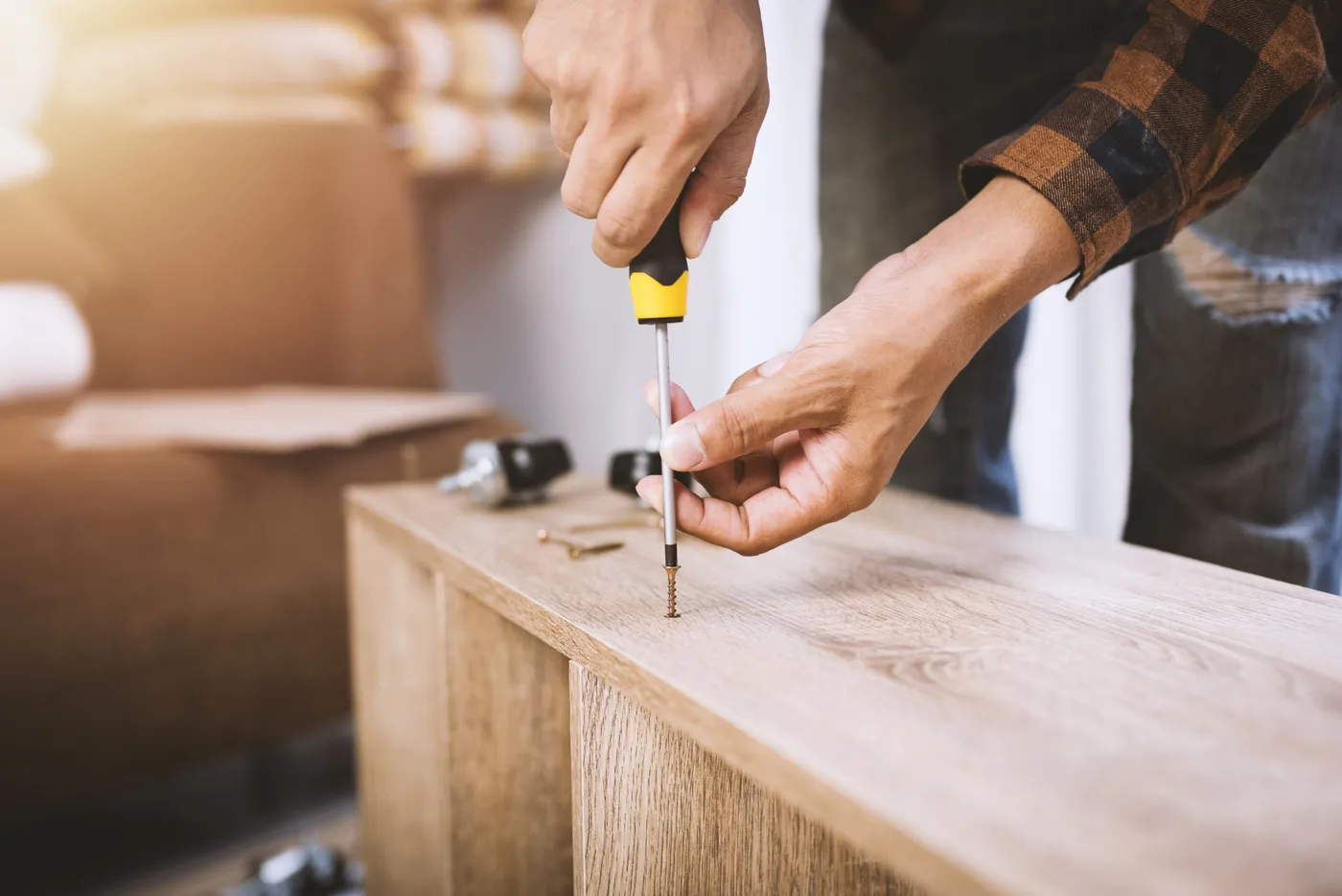
What usually has to come apart
- Bed frames, particularly king and queen sizes with a solid headboard.
- Sectional sofas — designed to separate, though the mechanism is not always obvious.
- Large dining tables — legs unbolt from the underside.
- Wardrobes and armoires, especially anything assembled in the room it stands in.
- Desks with a return or a hutch.
- Exercise equipment — treadmills and multi-gyms are frequently the single most awkward item in a house.
- Cots and bunk beds.
What usually does not
Chests of drawers, bookcases, most armchairs and most single-piece sofas make it through intact — provided you have measured. Which is the actual first step.
Measure first, disassemble second
The diagonal of the item against the narrowest point of the route decides it. Measure doorways, hallway turns, the stairwell turn and the lift at both addresses.
Do this a month out. Discovering it on the morning is what turns a smooth day into a difficult one. Small wins matter: taking sofa feet off often buys the two inches that were the whole problem.
Keeping track of the fixings
This is where reassembly goes wrong. The furniture comes apart fine, and then a bolt is missing.
The method that works:
- One bag per item. Not one bag for the whole house.
- Label the bag with the item's name.
- Tape the bag to the item itself — the underside of the table, the inside of the headboard. Not to a box, which will end up in a different room.
- Photograph each stage as you take it apart. It is much faster than working out the order in reverse at 9pm.
- Keep the Allen keys. The specific ones that came with the specific furniture.
Flat-pack: the honest warning
Furniture made from chipboard and cam-lock fittings was designed to be assembled once. Every disassembly and reassembly loosens the fittings, because the screws bite into board rather than timber.
Some of it survives a move well. Some of it does not survive at all, and the cheapest wardrobes frequently do not. That is worth knowing before the day rather than discovering after.
If a flat-pack item is old, already wobbly, or was difficult to build the first time, it may genuinely be worth replacing rather than moving. On a time-priced local move, the labour of taking it apart and rebuilding it can approach what the item is worth — see what a local move costs.
Solid wood furniture with proper joinery is a different matter entirely, and travels fine.
Reassembly at the other end
Do the beds first. Whatever else is unfinished, everyone needs somewhere to sleep, and a bed frame is much harder to assemble when you are exhausted.
Then work by room priority rather than by which boxes are nearest.
What we do
Disassembly and reassembly is a service rather than an afterthought — the items get taken apart properly, the fixings stay with the furniture, and it is rebuilt at the other end. If you have a bed frame, a sectional or a treadmill, mention it when you call so it is planned into the day.
It pairs with furniture movers for the heavy items, and moving heavy furniture covers the lifting side.
We serve Orlando, Maitland, Union Park, Seminole County and the surrounding area.
Call In A Zip Moving on (407) 987-2624 for a free quote.