
Moving With Pets in Florida's Heat
A move is confusing for an animal in a way it is not for a person. The furniture disappears, strangers come in and out, doors stand open all day, and then the whole world changes.
Two things cause nearly all the problems: escapes on moving day, and heat.
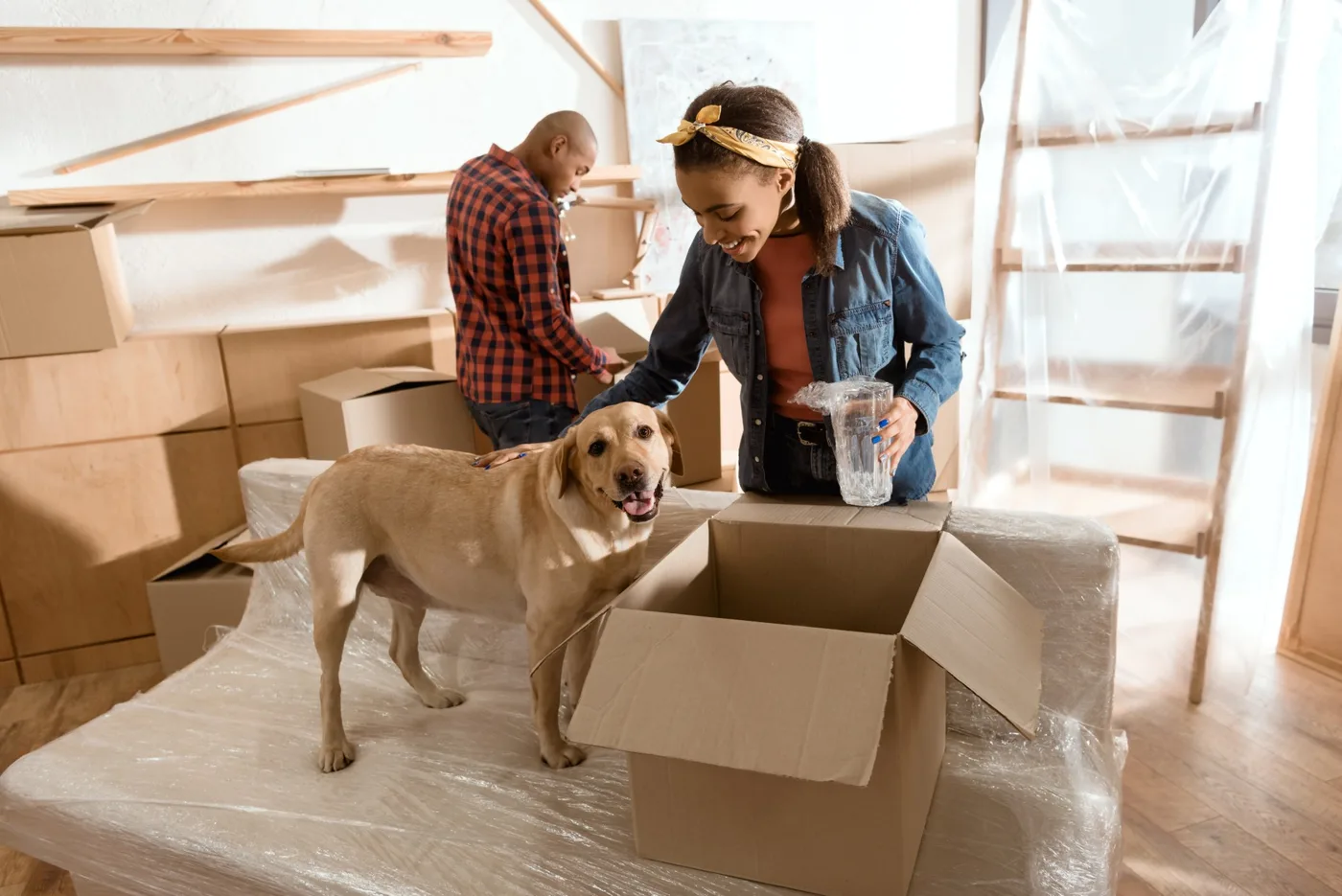
Before the day
Update the microchip details and the ID tag with the new address and your current phone number. Do this early. It is the single most valuable thing on this list, because it is what gets a pet home if the worst happens.
Get the vet records if you are changing practice, and find the new vet before you need one.
Introduce the carrier weeks ahead. Left open, with a blanket and treats inside, so it stops being the box that means the vet. A cat forced into an unfamiliar carrier on moving morning is a bad start to the day.
Keep their routine intact. Feeding times, walks, the usual bed. Pack their things last.
Moving day: keep them out of it
The best option is for them not to be there. A friend's house, a kennel, a daycare for the day. Moving day is the most likely day of your pet's life to involve an open front door, an open truck and nobody watching.
If that is not possible:
- One closed room, ideally a bathroom, with their bed, water, litter tray and a familiar toy.
- A sign on the door — "DO NOT OPEN, CAT INSIDE". A crew moving boxes cannot be expected to know.
- Check on them regularly.
- That room is packed last and unpacked first.
Keep dogs on a lead any time they are outside, even in a garden they know. Fences get propped open on moving day.
The heat, which is the Florida-specific part
This matters more here than almost anywhere:
- Never leave an animal in a parked car. Not for five minutes, not with the windows cracked. A car interior in Central Florida reaches lethal temperatures extremely quickly.
- Transport them in the air-conditioned cabin, never in the back of a truck. A moving truck's cargo area is not ventilated or cooled and is not survivable in summer.
- Water at every stage.
- Walk dogs early or late. Asphalt and paving that feels warm to your hand is hot enough to burn paw pads. Press the back of your hand to it for seven seconds — if you cannot hold it, they should not walk on it.
- Watch for overheating: heavy panting, drooling, unsteadiness, bright red gums. Flat-faced breeds are considerably more vulnerable.
Arriving
Set up one room first, exactly as their room at the old place was, before letting them explore. Their bed, bowls, litter tray, familiar smells.
Cats need confinement for several days. They orient by territory, and a cat let out too early frequently tries to travel back to the old house. Keep them indoors for at least a week — longer if they seem unsettled.
Dogs adjust faster but still need the boundaries walked with them on a lead, and the garden checked for gaps before they are let out alone.
Check the whole property for hazards before they have the run of it: gaps in fencing, gates that do not latch, and pool access. Pools are common here and a new pool is a genuine risk for a dog that has not learned where the steps are.
Settling in
Expect a week or two of odd behaviour — hiding, appetite changes, accidents indoors, clinginess. It passes.
Keep feeding and walking times exactly as they were. Routine is what tells an animal the world is still working.
One less thing to manage
The more of the move that is handled for you, the more attention you have for the animal that does not understand what is happening. That is a reasonable argument for handing over packing, and for having the day run to a plan — see the moving checklist.
We serve Maitland, Orlando, Goldenrod, Altamonte Springs and the surrounding area.
Call In A Zip Moving on (407) 987-2624 for a free quote.