
A Family's Guide to Moving an Older Parent
Moving an older parent is not a bigger version of moving a student. The volume is larger, the timeline is longer, and the hardest part is rarely logistical.
Whether it is downsizing to something smaller, moving closer to family, or a move into assisted living, the approach that works is slower and more deliberate than a normal move.
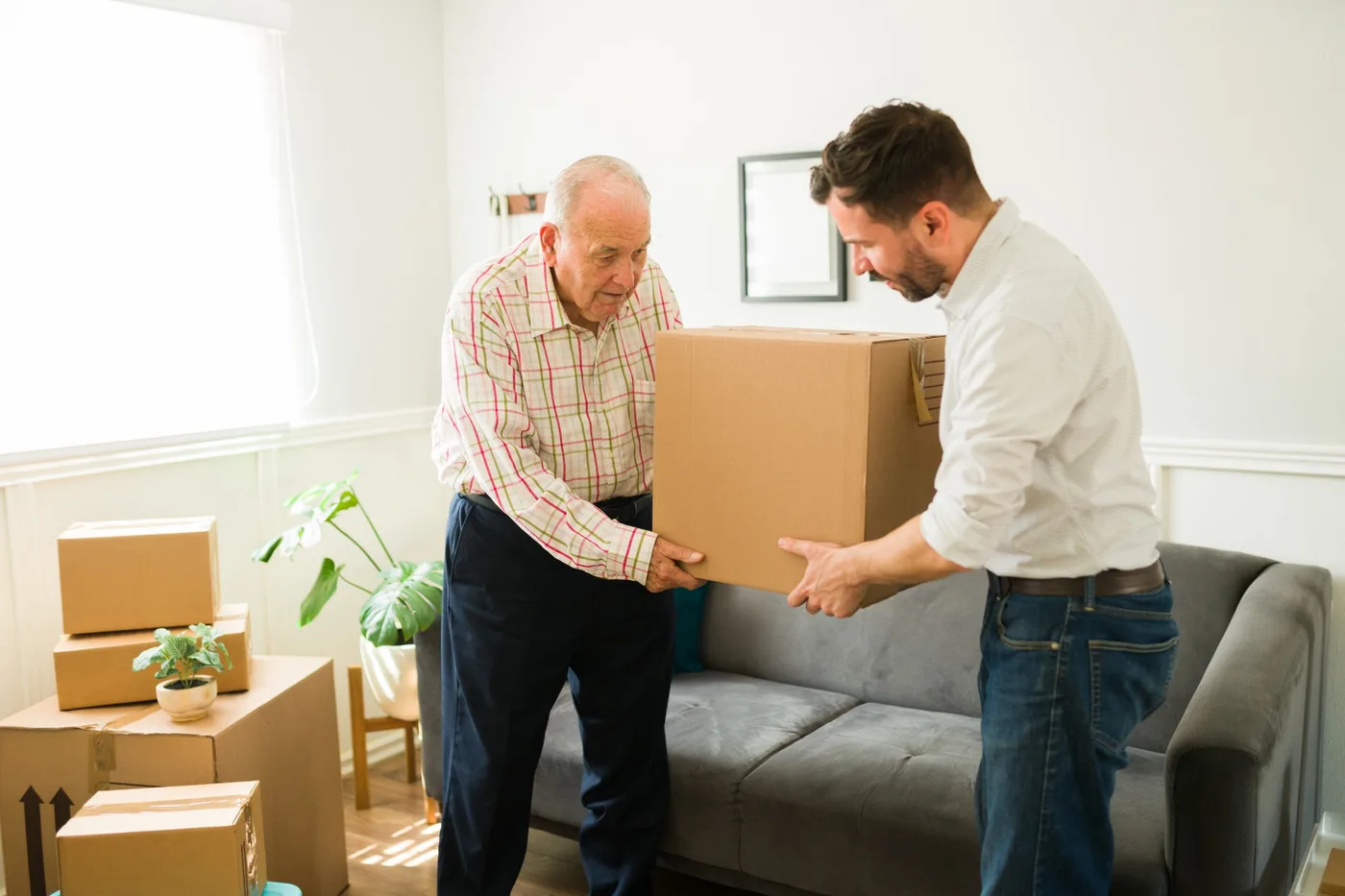
Start much earlier than feels necessary
A house lived in for thirty years holds a great deal more than one lived in for five, and decisions about it cannot be rushed.
Where a typical move wants eight weeks, this wants two to three months if you have them. Not because the packing takes longer — because the deciding does.
The sorting, which is the real work
Every item carries a decision, and some carry a memory. Going room by room and expecting quick answers does not work.
What tends to help:
Start with the least personal rooms. Garage, bathroom, kitchen. Practical decisions build momentum before you reach the loft and the photographs.
Four categories, not two. Keep, give to family, donate or sell, dispose. "Give to family" resolves a surprising amount — the difficulty is often losing the object, not owning it.
Measure the new place first. This is the most useful thing you can do. Knowing exactly what fits turns an abstract argument into a practical one: the dining table will not go in, so which pieces matter most?
Photograph what is not coming. For furniture with history, a photograph carries much of what the object did, and it makes letting go easier.
Short sessions. Two or three hours is plenty. Fatigue makes decisions harder and moods worse.
The part nobody plans for
This is frequently a grief process rather than a logistics one. A house is where a family happened. Leaving it is a real loss, even when the move is entirely the right decision and everyone agrees it is.
That shows up as sudden resistance over something small, or exhaustion out of proportion to the work. Both are normal.
Two things that genuinely help: keep them in charge of the decisions wherever possible, and do not treat speed as the goal. A move done efficiently over someone's objections is not a success.
Moving into assisted living
The constraints are different and worth knowing early:
- Space is tighter than expected. Get the floor plan with actual dimensions.
- There are usually rules about what can be brought and how it is installed.
- Move-in times may be restricted, sometimes to specific days.
- Familiar things matter disproportionately in a new environment. A favourite chair, the right bedside lamp, the photographs — prioritise those over practical items that can be replaced.
Call the facility and ask about all four before packing anything.
Practical things specific to this
- Medication travels with the person, never on the truck, with a current list.
- Documents — deeds, wills, insurance, medical records — travel with family.
- Set up the bedroom first at the new place. A made bed and familiar bedside things do more for the first night than any other room.
- Do not leave them alone in an unfamiliar place on the first evening if you can avoid it.
What a senior move should look like
Patience, mostly. A crew that understands the pace is different, that the person moving is in charge of their own belongings, and that a day like this is not measured only in how fast the truck loads.
That is what senior moving is set up for. Packing is very often worth handing over in these moves — the volume is large and the work is physical — and professional packing can be arranged alongside.
We serve Maitland, Winter Park, Altamonte Springs, Oviedo and the surrounding area.
Call In A Zip Moving on (407) 987-2624 and tell us about the move. We will talk through timing before anything is booked.