Moving Heavy Furniture Without Damaging It (or Yourself)
Nearly every injury and nearly every hole in a wall comes from the same decision: someone decided a thing would fit, and it didn't, and they kept pushing.
Measure first. Most of this article is downstream of that.
Measure the diagonal, not the width
People measure the sofa. Then they measure the doorway. Then they get stuck.
The number that matters is the diagonal — corner to corner across the face of the item. That's the dimension that actually has to clear the opening, because you turn things to get them through.
Measure the route as well as the item. Doorways, the narrowest point of the hall, the turn at the top or bottom of the stairs, the lift if there is one. Both addresses. Do it a month out, not at seven in the morning with a crew standing in your driveway.
The stairwell turn catches more sofas than the staircase ever does. A straight flight is fine. It's the ninety-degree landing at the bottom that decides whether this is a twenty-minute job or a two-hour one.
Take the feet off
Before you conclude something won't fit, try the obvious things.
Sofa feet unscrew. That alone is often the two inches you were missing. Doors lift off hinges — both the furniture's and the room's. Table legs unbolt from underneath. Wardrobe doors come off. Bed frames were designed to come apart and usually will.
Keep the hardware in a bag, label the bag, and tape it to the item it came off. Not to a box. Boxes end up in a different room and the bag is never seen again. That's how a wardrobe ends up leaning against a wall for three weeks.
If you'd rather not be doing this yourself, disassembly and reassembly is a service for exactly this reason.
Lifting, properly
Legs, not back. Bend the knees, keep your back straight.
Load stays close to the body. The further out you hold something, the more it weighs as far as your spine is concerned.
Don't twist while you're carrying. Turn with your feet. Every back injury I've heard described in detail involved someone twisting under load.
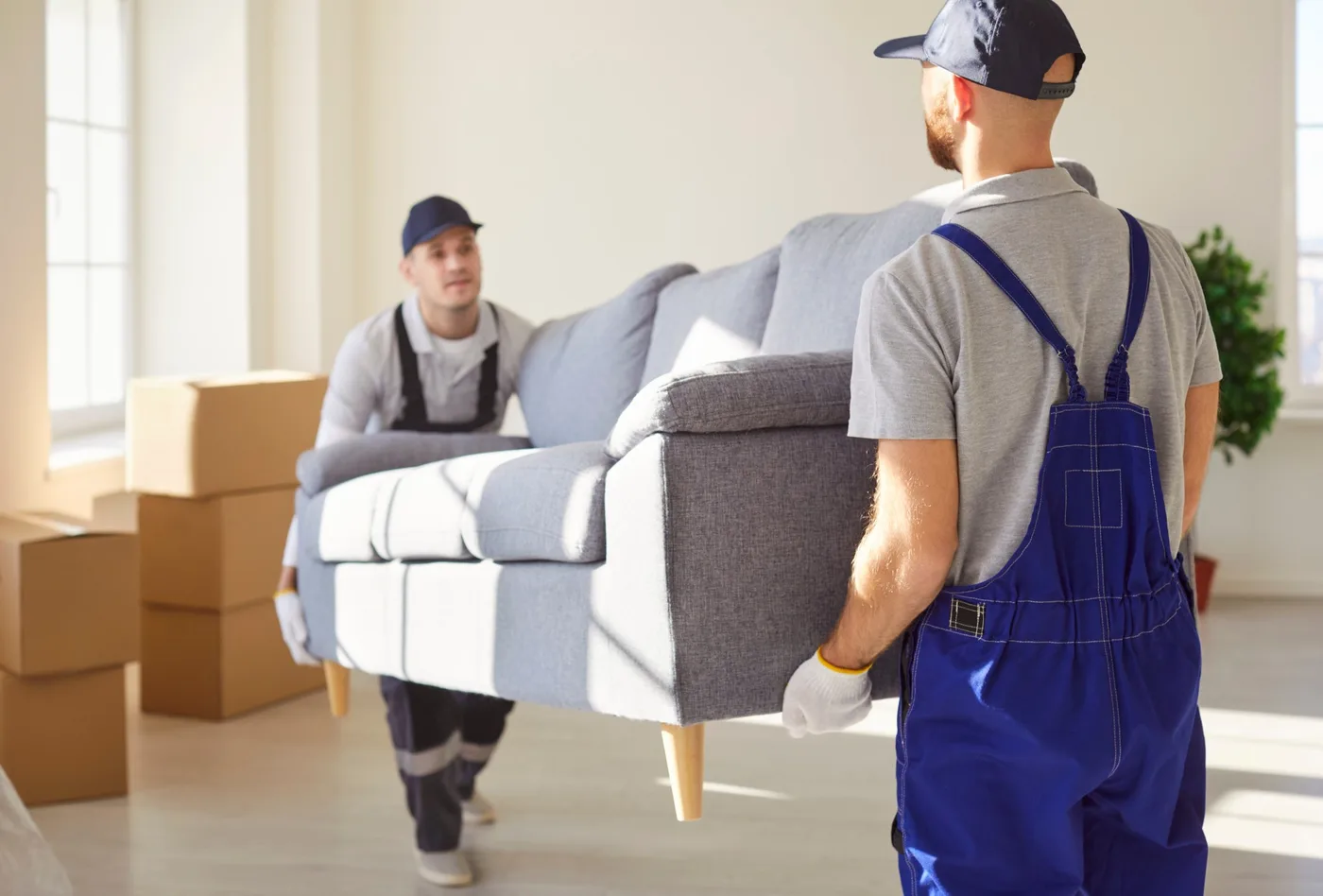
Talk constantly. "Stopping." "Step behind you." "Putting it down." The two people on either end of a wardrobe need to be doing the same thing at the same time, and neither can see the other. Silence is how fingers get crushed.
And if it's too heavy for the people available — it's too heavy. That's a real answer, not a failure of nerve.
Kit that earns its place
Furniture sliders. Put them under the feet and dragging becomes pushing. On tile and hardwood — which is most of Central Florida — they change the job completely.
A dolly for anything heavy with a flat base. An appliance trolley with a strap for fridges and washers.
Lifting straps, which shift load onto your legs and shoulders and off your lower back.
Blankets and stretch wrap. Blankets protect the furniture; the wrap holds the blankets on and keeps drawers and doors shut in transit.
Protect the house, not just the furniture
Deposits get lost to walls and floors far more often than to the furniture itself.
Cardboard or a blanket on the door frames at the tight points. Something down along the route on hardwood and tile. Take the room door off its hinges if it buys you clearance, which it frequently does.
A scuffed dresser is your problem. A gouged stairwell wall is your landlord's, and they will find it.
Four things that need naming when you book
Fridges travel upright. Empty, defrosted and dry, ideally a full day ahead. If it absolutely has to go on its side, it needs to stand upright for several hours before anyone plugs it in — the oil needs to settle back out of the lines.
Washing machines need the drum secured, usually with transit bolts. Hoses off and drained. A loose drum on a bumpy road is how a washer gets wrecked.
Pianos aren't a DIY job. The weight sits in places you wouldn't guess, and the damage from getting it wrong runs in both directions — to the instrument and to whoever's underneath it. Say you've got one when you get your quote.
Safes the same, and for the same reason. Tell your mover in advance; it changes the equipment and the crew size.
On the stairs
Heaviest end goes downhill. The person at the bottom sets the pace, because they're the one who can't step back.
Slow. Rest on the landings. Nobody is impressed by speed on a staircase.
And if it won't go round the turn — stop. Put it down. Take it apart. Forcing it is how you get both a damaged sofa and a damaged wall, and you'll still end up taking it apart afterwards.
When to hand it over
If you've got a piano, a safe, a third-floor walk-up, or simply nobody in the house who ought to be lifting a wardrobe, that's what furniture movers are for.
Worth flagging at quote stage either way — heavy and specialist items change what the day needs, which is part of why what a local move costs varies so much between two houses that look identical from the street.
We cover Oviedo, Orlando, Winter Park, Brevard County and the rest of Central Florida.
Tell us what you've got: (407) 987-2624.