
What Movers Won't Take (and What to Do With It All)
There is a shelf in almost every garage in this county. Half a gallon of exterior paint from a job in 2019, a rusting can of charcoal lighter fluid, three aerosols with no caps, a bag of pool shock, and a propane tank of genuinely unknown status.
Nobody thinks about that shelf until the morning of the move, when someone in a uniform looks at it and says: none of this is going on the truck.
They are not being awkward. Most of what is on that shelf is hazardous material, and it is not legal to put it in the back of a household goods truck. The rest of the list is things that will not survive the trip or that you will be much happier keeping in your own car.
Deal with it three weeks out and it is a Saturday errand. Deal with it on the day and it is a problem with a crew standing next to it.
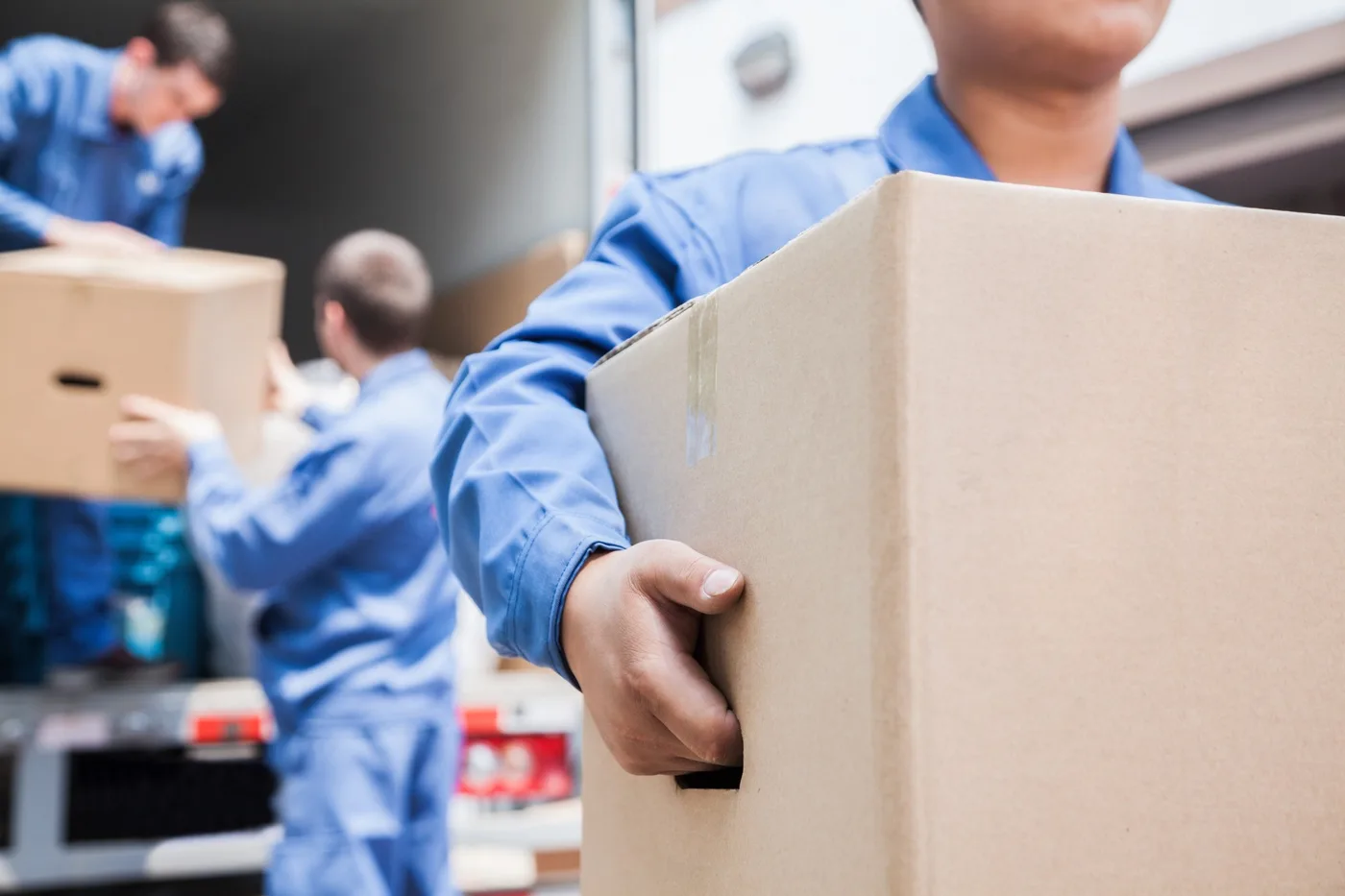
The ones that are not up for discussion
Flammables, explosives and corrosives. No household mover in Florida will load these, and asking nicely will not change it — a truck full of other people's belongings with a leaking can of solvent in it is a fire, and the rules exist because that has happened.
The list is longer than most people expect:
- Fuels and fluids — gasoline, kerosene, diesel, lamp oil, lighter fluid, motor oil, antifreeze, brake fluid.
- Propane and any pressurised cylinder — grill tanks, camping canisters, oxygen, helium, scuba tanks, most fire extinguishers.
- Paint and everything near it — oil and latex paint, stain, varnish, paint thinner, turpentine, acetone, nail polish remover.
- Aerosols — spray paint, hairspray, air freshener, insect spray, WD-40, spray sunscreen.
- Pool and garden chemicals — chlorine, shock, muriatic acid, weedkiller, fertiliser, pesticides.
- Cleaning chemicals with teeth — bleach, ammonia, drain cleaner, oven cleaner.
- The obvious ones — fireworks, ammunition, flares, matches, charcoal, car batteries.
Two that catch people every time: charcoal, because it is in a paper bag next to the grill and does not look like a hazard, and nail polish remover, which travels in a bathroom box and is very much a solvent.
If you own firearms, ask your mover specifically rather than assuming. Practice varies, ammunition is a flat no everywhere, and it is not a conversation anyone wants to have for the first time in a hallway on moving day.
Propane, specifically
The grill tank is the single most common argument in this business.
It will not go on the truck. Not when it is full, and usually not when it is empty either, because "empty" tanks keep vapour and a tank is a pressure vessel whatever the gauge says. Take the tank off, move the grill without it, and either exchange the tank at a hardware store on the way or leave it behind.
The same goes for the little green camping canisters in the garage, and for a spare tank you forgot about behind the shed. Go and look behind the shed.
The ones that are about physics, not law
These will not get anyone fined. They will just go badly.
Frozen and refrigerated food. In this climate it is not a close call. Run the freezer down over the fortnight before — treat it as a challenge — and give away or bin whatever is left. The fridge itself needs defrosting and drying a full day ahead anyway.
Open food. Anything already opened is a spill, a smell, or a tiny animal in a box six weeks later. Sealed and shelf-stable is usually fine; open jars, half-bags of flour and anything sugary are not worth the risk.
Houseplants. Most movers will not take them, and for a local move it is worth knowing why: a sealed truck in July gets far hotter than any plant tolerates, and nobody can insure a living thing. Put plants in the car with the windows cracked, or, for the big ficus you have had for fifteen years and cannot fit anywhere, accept that giving it to a neighbour is a kinder outcome than what the truck will do to it.
Candles. Not dangerous. Just gone, in August, all over whatever is underneath them.
Anything already broken or already damp. If something has been sitting in a Florida garage long enough to smell of a Florida garage, this is the moment to let it go rather than to move it and let it smell out a new garage.
The ones you should keep with you anyway
Nothing stops these going on a truck. Keep them out regardless, and keep them in one bag you do not put down.
- Cash, jewellery, watches, coin or stamp collections.
- Passports, birth certificates, social security cards, titles, deeds, insurance policies, the lease or closing paperwork.
- Medication — all of it, plus a written list.
- Laptops, hard drives, cameras, and anything with irreplaceable files on it.
- Keys. House, car, safe, filing cabinet, the shed. All of them, in one bag.
- Phone chargers, and the remote controls, because they end up in different boxes from the things they operate and are never seen again.
- The photo albums. Not because they will be damaged — because you will want them within reach on a night when everything else is in a stack.
A good mover will tell you to do this. Most of the standard coverage included with a move is calculated by weight, which is a poor fit for a small heavy envelope of documents or a light expensive laptop. Moving insurance, explained plainly sets out why.
Where all of it actually goes
The part people get stuck on. Household hazardous waste does not go in the bin, and it does not go down a drain.
Both counties most of our work is in run free drop-offs for residents. Orange County takes household hazardous waste at the Young Pine Road landfill and the Good Homes Road transfer station. Seminole County takes it at the Central Transfer Station on SR-419 in Longwood. There is no charge for residents, there are limits on how much paint you can bring in one carload, and hours change — check your county's solid waste page before you drive out. Volusia, Brevard and Osceola all run equivalent programmes.
A few that have their own routes:
- Propane tanks — exchange them at any hardware store or grocery forecourt rather than trying to dispose of them.
- Latex paint, if there is only a little, can often be dried out with cat litter and binned; oil-based paint never can.
- Medication — pharmacy take-back, not the toilet.
- Car batteries — the shop that sells them takes them back.
- Unopened, unexpired food — Second Harvest and local pantries will take it, and it is a far better end for three tins of chickpeas than a bin bag.
Give this its own Saturday, three weeks out. It is the single most satisfying afternoon of any move, and it is the one task that genuinely cannot be done on the day.
The sweep the night before
Walk the house with a bin bag and look specifically in the places nobody packs from: under the kitchen sink, the bathroom cabinet, the laundry cupboard, the garage shelf, the shed, the boot of the car and the little cupboard by the front door where the batteries and the spray polish live.
That sweep takes twenty minutes and it is where the last four aerosols always are.
If you would rather not do any of this
Sorting what travels from what does not is a real part of packing, and it is one of the reasons people hand the whole job over — see packing and unpacking, or should you hire packers? if you are still weighing it up.
Either way, tell us about anything unusual before the day: a gun safe, a large aquarium, a wine collection, a workshop full of solvents. None of it is a problem when it is known about in advance.
We cover Winter Park, Maitland, Goldenrod, Union Park and the rest of Central Florida.